AI SEO Audits: 8 Fixes That Help You Rank Higher When Generative Search Gets It Wrong


Generative search is rewriting the rules. Google's AI Overviews, ChatGPT search, and Perplexity now answer questions directly — and if your content isn't structured for machines to parse, you're invisible. AI SEO rank higher strategies are no longer optional; they're the difference between being cited and being skipped. This checklist maps out eight concrete audit fixes that address exactly how AI models misread, misrepresent, or outright ignore your pages — so you stop losing traffic you've already earned.
Most site owners run a basic crawl, fix broken links, and call it done. That's not enough anymore. AI systems don't just index your page — they interpret it, extract claims, and decide whether your site is a trustworthy source worth surfacing. Each fix below targets a specific failure point in that interpretation chain.
-
1. Audit Your Schema Markup — The Language AI Actually Reads
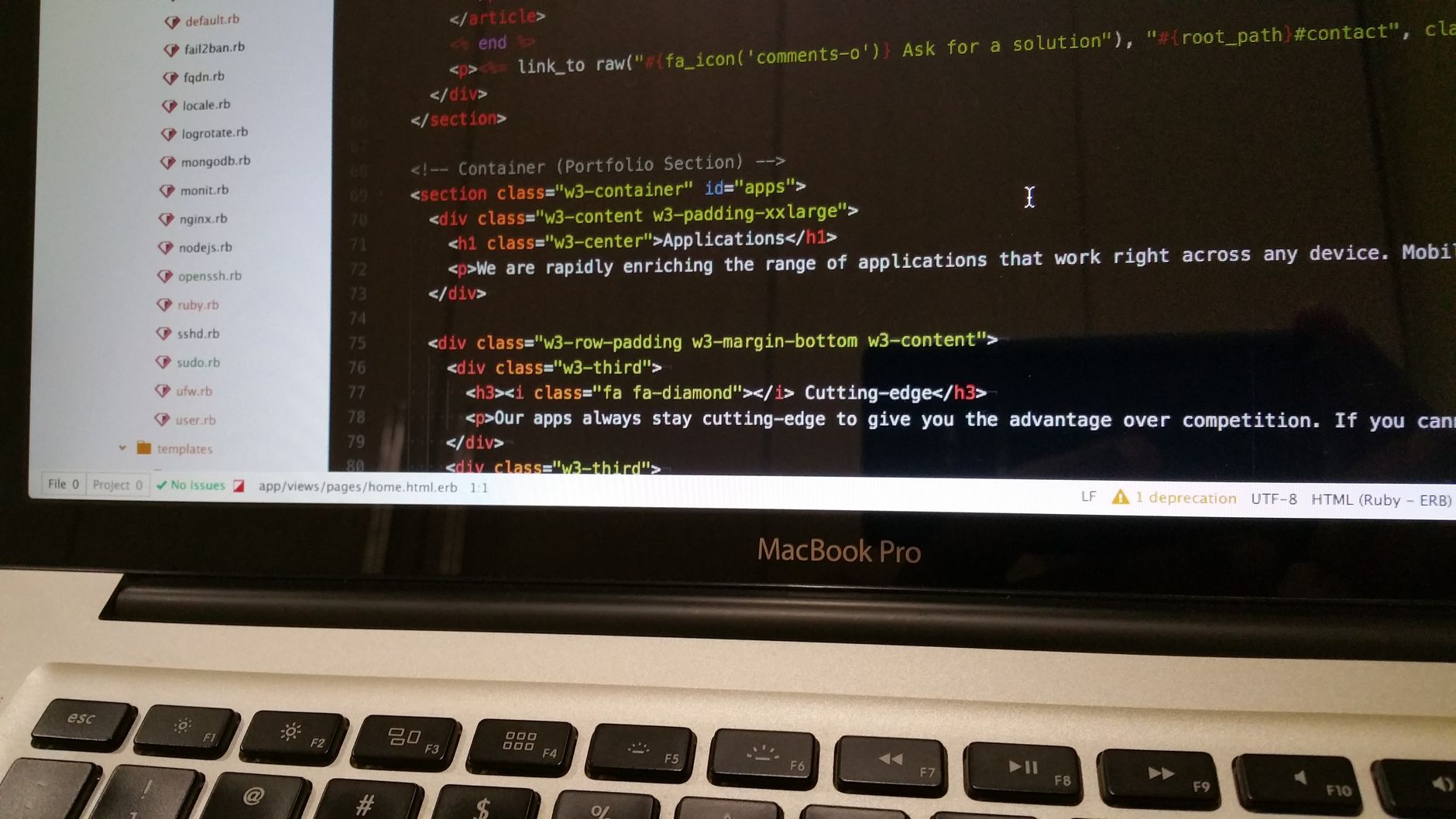
Schema is the single most direct signal you can send to an AI system. Without it, a generative model has to guess what your page is about by scraping raw text. That guessing produces errors — wrong summaries, misattributed facts, or no citation at all. Structured data gives AI a verified answer key.
Start by checking whether your key pages use
Article,FAQPage,HowTo, orProductschema where appropriate. A blog post about mortgage rates should carryArticleschema withdatePublished,author, andpublisherfilled in — not left blank. Missingauthorfields alone can tank your E-E-A-T signals in AI-generated answers.Use the SEOjama Schema Generator to build and validate your markup without touching raw JSON-LD. Then cross-check against Google's Rich Results Test to confirm no errors. Common mistakes include nesting errors, missing required properties, and using deprecated types like
NewsArticlefor evergreen content.- Add FAQPage schema to any page that answers a specific question — AI Overviews pull directly from FAQ blocks.
- Use Speakable schema for key summary paragraphs; voice assistants prioritize this markup.
- Always include dateModified — AI systems deprioritize stale content without a clear update signal.
-
2. Fix Content Clarity — Vague Writing Gets Paraphrased Badly

AI language models summarize. If your sentences are hedged, passive, or buried in qualifiers, the model will either skip your content or produce a garbled paraphrase that misrepresents your position. Clarity is an SEO asset, not just a style preference.
Run a readability check on your top-traffic pages. Target a Flesch Reading Ease score of 60 or above. Pages scoring below 50 consistently underperform in AI-generated citations because the model can't cleanly extract a quotable claim. Rewrite passive constructions: "It has been found that X" becomes "Studies show X."
One underrated fix: lead every section with your conclusion. AI systems extract the first clear sentence of each paragraph most aggressively. If your key claim is buried in sentence four, it won't get cited. Put the answer first, then explain it.
- Replace hedging phrases ("it could be argued") with direct assertions backed by evidence.
- Break up any paragraph over five sentences — AI parsers lose confidence in long, dense blocks.
- Use numbered lists and clear headers; these act as natural extraction points for generative answers.
-
3. Strengthen Authority Signals — AI Cites Sources It Can Verify
Google's AI Overviews don't randomly pick sources. They favor pages with strong E-E-A-T signals: named authors with credentials, citations to primary research, and consistent brand mentions across the web. A page with no author byline, no outbound citations, and no backlinks is essentially anonymous to a generative model.
Audit your author pages first. Every author should have a dedicated bio page with their name, credentials, social profiles, and links to other published work. This isn't vanity — it's a verification chain. AI systems cross-reference author identity across sources. A named expert who appears on LinkedIn, in industry publications, and on your site carries far more weight than "Staff Writer."
Next, audit your outbound links. Pages that cite no external sources look self-referential and untrustworthy to AI ranking systems. Aim for at least two to three outbound links to authoritative primary sources per long-form page — not to Wikipedia, but to original studies, official documentation, or recognized industry publications.
- Add a credentials block near the top of each article: author name, title, and years of experience.
- Link to primary research (journal articles, government data, official specs) rather than secondary summaries.
- Build consistent NAP data (Name, Address, Phone) across directories — especially for local sites, where AI assistants pull from structured business data.
-
4. Run a Full On-Page SEO Audit — AI SEO Rank Higher Starts With the Basics

Generative AI doesn't bypass on-page fundamentals — it amplifies them. A page with a weak title tag, missing meta description, and duplicate H1s gives AI systems contradictory signals about what the page is actually about. The result: the model either skips your page or cites it for the wrong query.
A structured on-page SEO audit should cover title tags, meta descriptions, H1/H2 hierarchy, internal linking, image alt text, and canonical tags. These aren't checkbox items — each one is a disambiguation signal. A title tag that says "Blog Post #47" tells an AI model absolutely nothing. A title tag that says "How to Calculate Mortgage Amortization: A Step-by-Step Guide" tells it everything.
SEOjama scores your pages across 20+ on-page factors and surfaces prioritized fixes — so you're not guessing which issues matter most. Run a free SEO audit on your site right now and see exactly where your pages are losing AI visibility. Fixing the top three issues on a page typically produces measurable ranking movement within four to six weeks.
- Ensure every page has a unique, descriptive title tag under 60 characters with the primary keyword near the front.
- Write meta descriptions as direct answers to the user's likely question — AI systems use these as summary candidates.
- Fix any broken internal links — AI crawlers treat link errors as a trust signal failure.
- Add descriptive alt text to all images; AI systems increasingly process image context alongside text.
-
5. Optimize for Citations — Structure Content So AI Can Quote It
Being cited in an AI Overview is the new position zero. But citation isn't random. AI systems extract content that is self-contained, factually specific, and formatted for scanning. A 400-word paragraph with one buried statistic will lose to a tight 80-word block that states a clear fact, names a source, and provides context.
The practical fix: add a "Key Takeaway" or "Quick Answer" block at the top of every article. Keep it under 100 words. State the core answer directly. AI Overviews are trained to surface these dense, high-confidence answer blocks over discursive prose. Think of it as writing a structured abstract, not a teaser.
Also audit your use of statistics. Citing a number without a source is a red flag for AI verification systems. "Conversion rates improve by 30%" is weak. "Conversion rates improve by 30%, according to a 2023 HubSpot study of 1,200 B2B companies" is citable. Specificity is the currency of AI trust.
- Add a "Quick Answer" box at the top of every informational page — keep it under 100 words and format it as a direct response.
- Always attribute statistics to named, dated sources — vague claims get filtered out by AI verification layers.
- Use definition-style opening sentences for key terms; these match AI's preference for encyclopedic extraction.
-
6. Audit Technical Crawlability — What AI Can't Reach, It Can't Cite
Even perfect content fails if the page can't be crawled efficiently. AI systems rely on the same Googlebot infrastructure — and if your pages are blocked by a misconfigured
robots.txt, buried behind JavaScript rendering, or loading in over four seconds, they're effectively invisible.Check your
robots.txtfor accidental disallow rules on key content directories. This is more common than you'd think — a staging environment rule that never got removed, or a CMS plugin that added a blanket disallow. Next, run a PageSpeed check on your highest-value pages. Core Web Vitals aren't just a ranking factor; slow pages get crawled less frequently, which means AI systems see older versions of your content.JavaScript-rendered content is the biggest hidden risk. If your key content only appears after a JS event fires, many crawlers — including AI-adjacent ones — never see it. Server-side rendering or static generation is strongly preferred for any content you want cited in AI answers.
- Audit
robots.txtandnoindextags monthly — one bad rule can deindex an entire content section. - Target a Largest Contentful Paint (LCP) under 2.5 seconds on mobile; this is Google's threshold for "good."
- Submit an updated XML sitemap whenever you publish or significantly update content — use the SEOjama Sitemap Generator to keep it current.
- Audit
-
7. Build Topical Authority — AI Rewards Depth, Not Breadth
AI ranking systems don't just evaluate individual pages — they evaluate your site's overall topical authority. A site with 200 thin pages on 50 different topics looks like a content farm. A site with 30 deep, interlinked pages on one topic looks like an expert. The second site gets cited. The first gets filtered.
Audit your content clusters. Do your pillar pages link to supporting articles? Do supporting articles link back to the pillar? This internal linking structure isn't just good UX — it signals to AI systems that your site has a coherent, expert-level coverage of a topic. A gap in the cluster (e.g., a pillar page about "email marketing" with no supporting articles on segmentation, automation, or A/B testing) signals incomplete expertise.
According to Google's Helpful Content guidelines, content should demonstrate first-hand expertise and depth. That means covering sub-topics your competitors skip, addressing edge cases, and updating content when the topic evolves — not just when your traffic dips.
- Map your content into pillar-cluster structures and audit for gaps at least quarterly.
- Add internal links from new posts to older, authoritative pages — this passes authority and reinforces topical depth.
- Retire or consolidate thin pages under 600 words that cover topics your stronger pages already address.
-
8. Monitor Your AI Visibility — What You Don't Measure, You Can't Fix
Most site owners have no idea whether they're being cited in AI Overviews. They check Google Search Console for clicks and impressions, but AI citations often generate zero clicks — the user gets the answer without visiting the page. That means traditional analytics will undercount your AI-driven exposure significantly.
Set up a monitoring workflow: search your target queries manually in Google with AI Overviews enabled, in Perplexity, and in Bing Copilot. Screenshot or log which sources get cited. Do this weekly for your top 20 queries. It's manual, but it's the only way to know if your fixes are working — and to spot when a competitor displaces you.
Pair this with regular SEO score tracking. SEOjama's workspace runs continuous scans across your connected pages and flags regressions before they compound. Discover how the platform works at seojama.com/how-it-works and see how AI-powered audit reports translate directly into the kind of structured, citation-ready content that generative search rewards.
- Track AI citation share manually for your top 20 queries — weekly, not monthly.
- Use Google Search Console's "Search Appearance" filter to identify pages that trigger AI Overviews.
- Set up Google Alerts for your brand name and key claims to catch misattributions in AI-generated answers.
The Bottom Line: Audit for AI, Win in Search
Generative search isn't replacing SEO — it's raising the bar for what good SEO looks like. The sites that win in AI-driven results are the ones with clean schema, clear writing, verified authority, and deep topical coverage. None of these are new ideas, but the precision required to execute them has never been higher.
The eight fixes above aren't a one-time project. They're an ongoing audit discipline. Run them quarterly at minimum, and run them every time you publish a new content cluster. The gap between sites that AI cites and sites it ignores will widen fast — and catching up later costs far more than staying ahead now.
Get started today: Run your free SEO audit on SEOjama and get a prioritized list of exactly which fixes will move the needle most for your site. Your AI visibility score is waiting.
Want results like this for your site?
Run a free SEO audit and get actionable fixes in seconds.
Run a free SEO audit →

